TRUST: THE FOUNDATION OF EVERY INSTITUTION, AND THE MISSING LINK IN OUR DEMOCRACY
A government can impose authority. It can impose restrictions. It can even impose a curfew. But it can never impose TRUST.
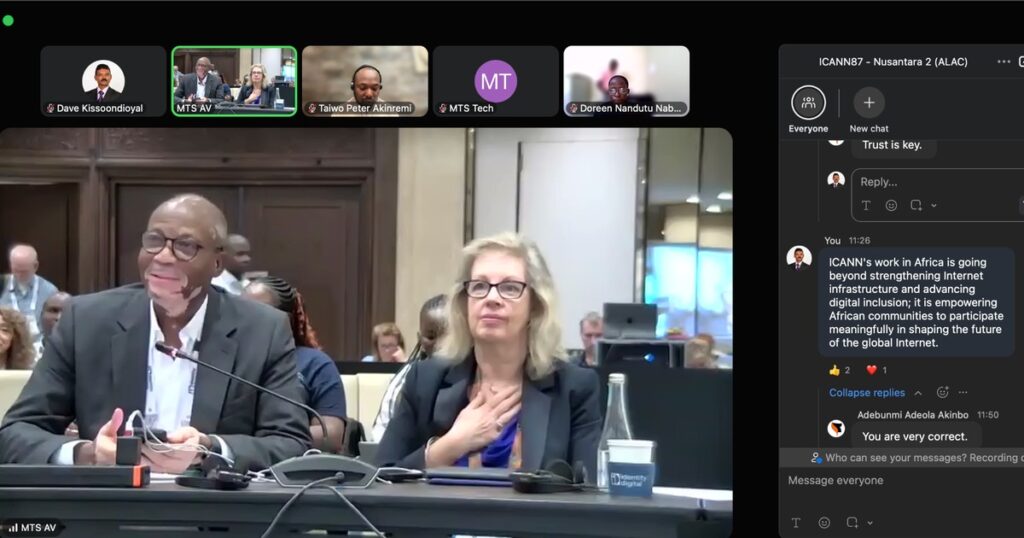
Today, 19 October 2026, while participating online in ICANN87, being held in Bali, Indonesia, one word caught my attention during the Africa Space discussions: TRUST.
It was raised by Sally Costerton, a senior ICANN executive and former Interim President and CEO of the organisation.
Having been involved in Internet governance for more than two decades, including serving in various international responsibilities within the ICANN community, I have learned that trust is not simply a desirable quality in an institution. It is the very foundation of its legitimacy.
As I listened to her reflections on the importance of trust in an organisation such as ICANN, my thoughts naturally turned towards Mauritius. What happens to a democracy when its people begin to lose TRUST in those entrusted with governing them?
TRUST IS NOT GIVEN. IT IS EARNED.
Trust is the invisible bond that holds relationships, organisations and societies together. A child trusts a parent to provide protection. A patient trusts a doctor to provide care. An employee trusts an employer to act fairly. A customer trusts a business to honour its commitments. And a citizen trusts a government to protect their rights, ensure their security and act in the national interest.
But trust is fragile. It takes years to build and sometimes only a few decisions to destroy. An institution does not become trustworthy simply because it possesses authority. A leader does not deserve trust merely because he occupies a position of power.
Authority may come from an appointment or an election. Trust comes from conduct.
MAURITIUS: A CRISIS THAT GOES BEYOND THE RECENT UNREST
For seven days, Mauritius lived under curfew amid unrest, insecurity and violence. I have consistently condemned violence and destruction. Nothing can justify putting innocent lives, families, businesses and our country’s future at risk.
But we must have the courage to ask ourselves why our society has reached such a worrying situation. For years, Mauritians have been raising concerns about the cost of living, water shortages, insecurity, drugs, road accidents, poverty and the future of their children.
How many times have promises been made? How many announcements have been celebrated? And how many ordinary citizens are still waiting to see meaningful changes in their daily lives?
When a mother wakes up at four in the morning to collect water, she does not need another political speech. She needs water. When parents fear that drugs may destroy their children’s future, they do not need reassuring statistics. They need to see effective action against drug trafficking. When families struggle to put food on the table, they do not need to be told that everything is under control. They need to feel that their government understands their suffering.
Every unfulfilled promise weakens confidence. Every unanswered question deepens suspicion. Every failure to accept responsibility widens the distance between the people and those who govern them. And slowly, trust begins to disappear.
A GOVERNMENT CAN IMPOSE A CURFEW. IT CANNOT IMPOSE TRUST.
The recent events have demonstrated that the State possesses the power to impose restrictions, deploy security forces and enforce a curfew. But maintaining order and restoring public confidence are two very different responsibilities.
A curfew may temporarily restore calm. It cannot resolve poverty. It cannot put food on a family’s table. It cannot guarantee water in our homes. It cannot eliminate drugs from our communities. And above all, it cannot rebuild the trust that citizens may have lost in their institutions.
We were told that drug networks were behind the unrest. Citizens are entitled to ask what evidence supports those allegations, what investigations have established and whether those responsible have been identified and brought before justice. These are legitimate questions in a democracy. Asking them does not mean defending violence. It means demanding accountability.
A government can demand obedience to the law. But it must earn the confidence of the people.
THE LESSON FROM ICANN87
ICANN coordinates essential elements of the global Internet’s unique identifier systems, bringing together governments, businesses, technical experts, civil society and Internet users from different parts of the world. Its work depends on cooperation, transparency, accountability and the confidence of the global Internet community.
People may disagree. Interests may differ. Decisions may be contested. But institutions must continuously demonstrate that their processes are fair, inclusive and accountable. That is how trust is built and sustained.
The same principle applies to a nation. An electoral victory gives a government the constitutional authority to govern. It does not give it an unconditional entitlement to public confidence for the next five years.
Democratic legitimacy is obtained through elections. Democratic trust must be earned every single day. And that trust is strengthened when leaders listen, institutions act independently, mistakes are acknowledged and promises are translated into measurable results.
MAURITIUS NEEDS TO REBUILD TRUST, NOT SIMPLY RESTORE ORDER
I believe deeply in Mauritius and in the capacity of our people to overcome difficult times. But rebuilding confidence will require more than political declarations, public relations exercises or promises of future action. It will require honesty, humility, transparency, institutional independence and, above all, results.
Our citizens must feel that their voices matter, that justice applies equally to everyone, that public institutions serve the people rather than political interests, and that those who exercise power are prepared to be held accountable.
The people of Mauritius are not asking for miracles. They are asking for dignity, security, fairness and a government that honours its commitments.
Today, a discussion at ICANN87 about trust in a global organisation reminded me of something fundamental about the future of our Republic. A nation is not strong simply because its government exercises power. A nation is strong when its people have confidence in the institutions exercising that power.
And when that confidence begins to disappear, the responsibility to rebuild it rests first and foremost with those who govern.
Because when a government loses the trust of its people, the answer is not to demand more obedience from the people. It is to give the people more reasons to trust.
TRUST cannot be demanded. TRUST cannot be imposed. TRUST must be earned.
Dave Kissoondoyal | 19 October 2026
#TRUST #ICANN87 #Mauritius #Democracy #Leadership #Accountability #Transparency #GoodGovernance #InstitutionalTrust #PublicConfidence #RuleOfLaw #InternetGovernance #Maurice #Dignite #DaveKissoondoyal
Leave a Reply